

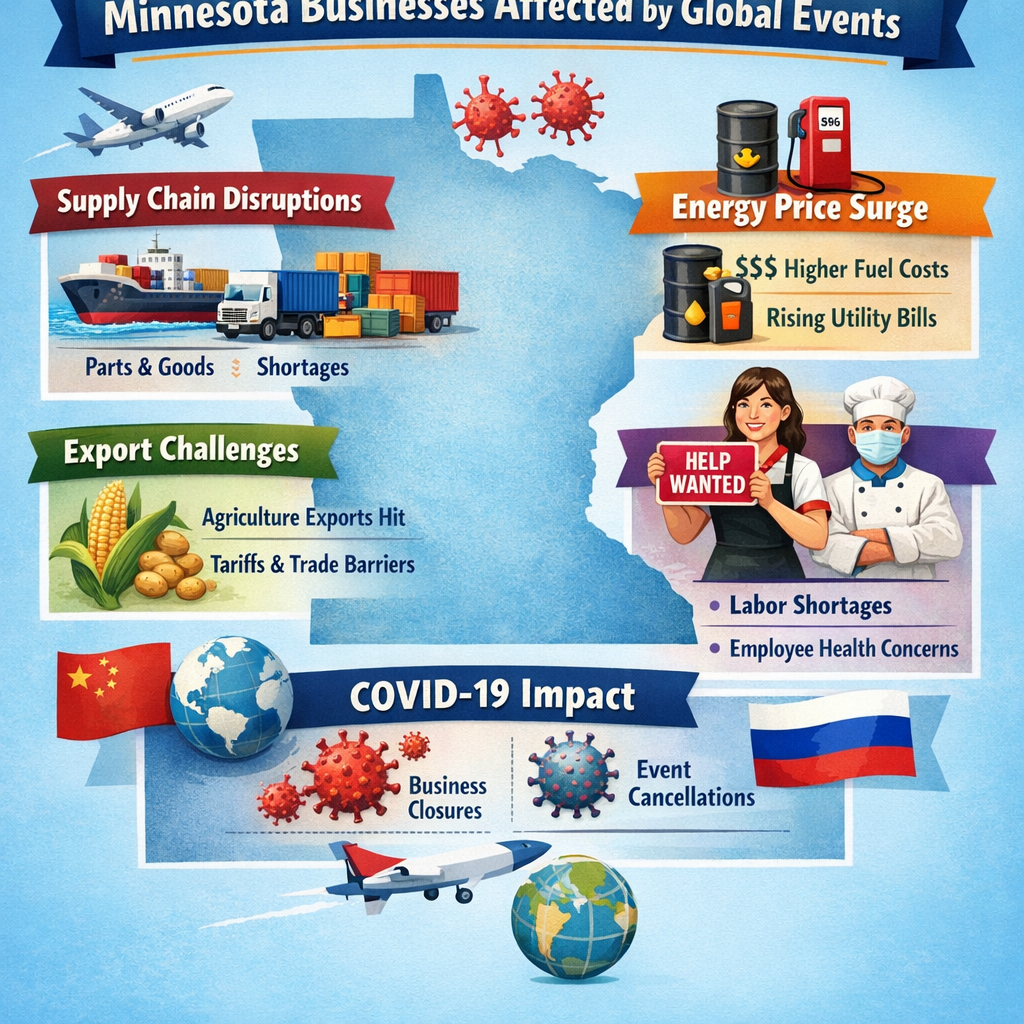
In our interconnected world, global events often have direct and significant effects on local economies, including here in Minnesota. Recent international developments have underscored the importance of understanding these connections.
Decline in Exports
In the second quarter of 2025, Minnesota experienced a substantial decline in exports, with a $1.3 billion decrease compared to the same period in 2024. This 19% drop was largely attributed to a significant reduction in mineral fuel and oil exports to Canada, which fell by 96%, amounting to a $703 million decrease. Additionally, exports to Mexico and China, Minnesota’s second and third largest markets, declined by over 20% each. These figures highlight the state’s sensitivity to global market fluctuations and trade policies.
Immigration Enforcement and Economic Disruption
In early 2026, the federal government’s Operation Metro Surge brought thousands of Immigration and Customs Enforcement (ICE) agents to Minnesota, aiming to intensify immigration enforcement. This surge had profound effects on local businesses and the broader economy. Many immigrant-owned businesses reported reduced foot traffic, staffing challenges, and lost revenue due to increased fear and uncertainty within the community. Governor Tim Walz emphasized the detrimental impact on small business owners, stating that the prevailing fear was undermining their hard work and contributions to the community.
Furthermore, a survey conducted by Meet Minneapolis revealed that 80% of respondents experienced canceled, postponed, or reduced bookings or sales following the ICE surge. The tourism and hospitality sectors were particularly affected, with 90% of partners reporting operational impacts and 72% noting staffing absenteeism. These disruptions underscore the broader economic consequences of federal immigration enforcement actions on local economies.
Community and Cultural Resilience
Despite these challenges, Minnesota’s communities have demonstrated resilience and a commitment to cultural engagement. Events like the International Festival of Minnesota, held in April 2026, celebrated the state’s cultural diversity and global connections. The festival featured participation from 67 nations and ethnic communities, offering global cuisine, artisan goods, and music and dance performances. Such events not only foster cultural understanding but also stimulate local economies by attracting visitors and promoting local businesses.
Organizations like Global Minnesota continue to play a vital role in connecting Minnesotans to global affairs through events and educational programs. Their efforts help residents navigate and understand the complex interplay between global events and local impacts.
Conclusion
Global events, whether economic shifts or policy changes, have tangible effects on Minnesota’s economy and communities. By staying informed and engaged, Minnesotans can better adapt to these challenges and continue to foster a vibrant, inclusive, and resilient state.