

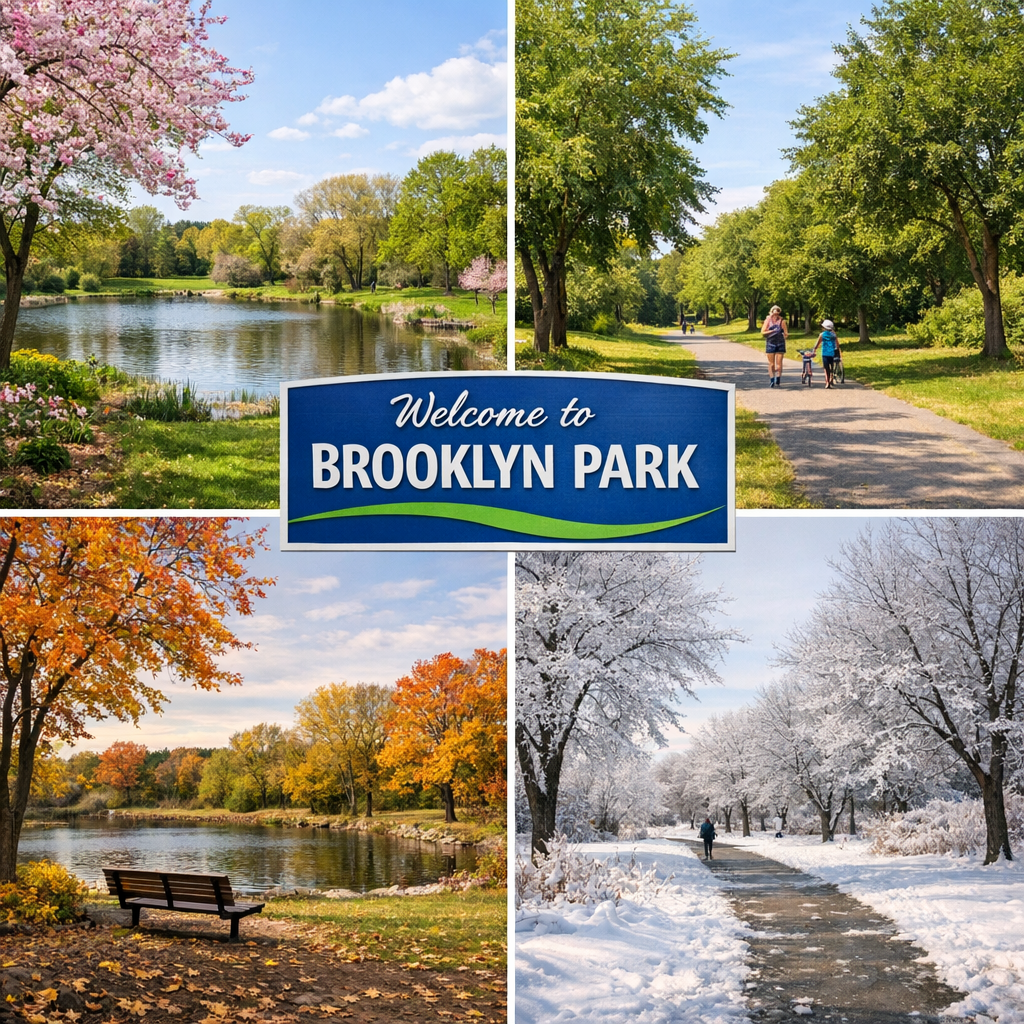
Brooklyn Park, Minnesota, experiences a diverse range of weather conditions throughout the year, characteristic of a humid continental climate. Understanding these patterns can help residents and visitors prepare for the seasons and appreciate the natural beauty of our community.
Spring: A Season of Renewal
Spring in Brooklyn Park, from March to May, marks a significant transition from the cold winter months. Average high temperatures rise from 38.8°F (3.8°C) in March to 65.8°F (18.8°C) by May. Rainfall increases during this period, with May receiving an average of 2.64 inches (67mm). Snowfall becomes rare, signaling the arrival of warmer days and longer daylight hours, which extend from 12 hours in March to nearly 15 hours by May.
Summer: Warm and Lush
Summers, spanning June through August, bring the warmest temperatures and longest days. July typically sees average highs around 80.8°F (27.1°C). Rainfall peaks in June, averaging 3.7 inches (94mm), contributing to the lush greenery of the season. Daylight lasts approximately 15.2 to 15.6 hours, providing ample time for outdoor activities.
Autumn: A Gradual Cool Down
Autumn, from September to November, features a gradual decrease in temperature. Highs drop from 70.7°F (21.5°C) in September to 40.1°F (4.5°C) by November. Daylight hours shorten from 12.5 to 9.6 hours. Rainfall decreases during this period, and by November, snowfall begins to make its return, averaging 3.15 inches (80mm).
Winter: Cold and Snowy
Winter months, December through February, are characterized by cold temperatures and snowfall. January is typically the coldest month, with average highs around 20.1°F (-6.6°C) and lows dropping to 7.5°F (-13.6°C). Snowfall is significant, with December averaging 4.8 inches (122mm). Daylight is limited, with the shortest days offering around 8 hours and 48 minutes of light.
Climate Change Impacts
Recent trends indicate that Minnesota is experiencing changes in its climate. Winters are becoming warmer, especially during nighttime, and the state is seeing more frequent and intense storms. These changes can affect local ecosystems, infrastructure, and daily life. For instance, Minnesota lakes have lost an average of 10 to 14 days of ice cover in the past 50 years, impacting recreational activities and aquatic life.
Understanding these patterns and changes is essential for adapting to our evolving environment and making informed decisions about our community’s future.